
How to Keep Wedding Flowers Fresh in Hot Weather: A Florist's Guide to Outdoor Weddings
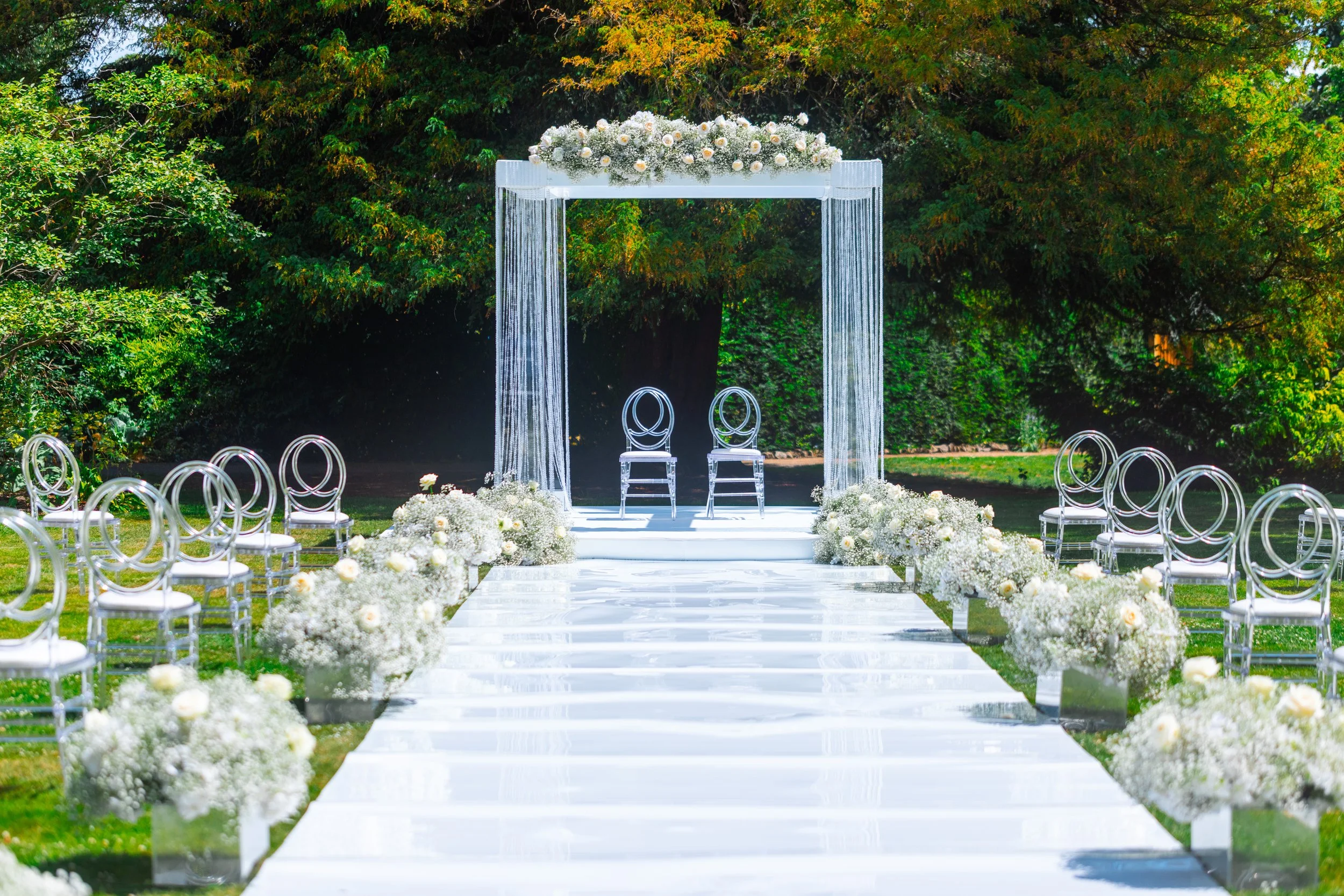
There is a particular kind of wedding day that every couple dreams about…Blue skies, warm sunshine, a beautiful garden, flowers looking glorious in the summer light and guests sitting outside with a glass in hand. Then there is the florist quietly checking the temperature, because while sunshine is wonderful for a wedding, flowers don't necessarily share our enthusiasm for a heatwave.
After the very hot weather we've experienced in the UK this summer, it's something more couples are understandably asking about: How do we keep our wedding flowers looking fresh if we're having an outdoor ceremony?
And perhaps even more importantly, can we still move those flowers afterwards and use them at the reception? The answer is often yes — but it needs to be planned from the beginning.
The days of treating an outdoor summer wedding exactly like an indoor wedding are becoming less practical. The Met Office's latest climate information shows that UK summers are getting warmer, while hot spells are projected to become more frequent, particularly across the south-east of England.
For couples getting married in London, Surrey and Essex, that means heat needs to become part of the floral conversation, not something you think about when the weather forecast looks alarming two days before the wedding.
Why does heat affect wedding flowers?
Cut flowers are still living plant material so once a flower has been cut, it relies on water uptake through its stem to maintain its structure. In warm conditions, flowers can lose water more quickly through transpiration, while high temperatures and sunlight increase the demands placed on the flower. Research from FloraLife also highlights how temperature, light, humidity and the condition of the stem all affect water uptake.
In simple terms? Heat makes flowers work harder. Put a freshly arranged floral design in a cool room and it may look beautiful for hours, put the same flowers in direct afternoon sunshine on a 30°C day and you have created a very different environment. This doesn't mean you can't have an outdoor wedding, it simply means your flowers need to be designed for the conditions they'll actually experience.
How do you keep wedding flowers fresh in hot weather?
There isn't one magic trick. Successful summer wedding flowers come down to a combination of flower selection, conditioning, hydration, shade, timing, transportation and installation. This is particularly important if you're hoping to repurpose your ceremony flowers. Let's look at each one:
1. Choose flowers with the weather in mind
This is one of the most important decisions you can make.
If your ceremony is going to take place outside in full sunshine at 2pm on a hot July day, your florist shouldn't be designing as though the flowers will be spending the day in an air-conditioned ballroom.
Some flowers naturally cope better with warmth and being out of water than others. Roses, carnations, chrysanthemums and some foliage varieties can be relatively robust choices, while particularly thirsty or delicate flowers may require considerably more care and careful positioning. That doesn't mean you have to abandon your favourite flower, it means your florist may use it strategically.
Perhaps the more delicate flowers are tucked into shaded areas of the design, while stronger varieties form the framework. Perhaps a flower you adore appears in your bouquet and more protected ceremony arrangements rather than being used extensively in an installation sitting in full sun. This is where floral design becomes more than simply choosing flowers based on colour, you're designing for the environment.
2. Hydration starts before the wedding day
Keeping wedding flowers fresh in the heat doesn't begin when the florist arrives at the venue, it starts long before that. Professional florists condition their flowers carefully before they are used in arrangements.
The RHS recommends re-cutting stems, removing foliage that would sit below the water line and allowing prepared stems to hydrate in clean water in a cool environment before being brought into warmer conditions. This preparation matters even more when you're expecting a hot wedding day. Think of it as giving the flowers the best possible starting point. A flower that arrives at the venue already well hydrated is in a much better position than one that has been sitting warm and thirsty for hours.
3. Keep flowers cool for as long as possible
This sounds obvious, but it is one of the easiest things to get wrong. If the ceremony is at 3pm, there is usually no reason for your flowers to sit outside in the sunshine from 9am. The longer flowers are exposed to heat, the greater the stress on them.
For an outdoor wedding, your florist may therefore plan installation much closer to the ceremony than they would for an indoor event. That requires coordination, the venue needs to provide access, the florist needs enough time to install safely and the ceremony needs to start on schedule. Lastly, everyone needs to understand that “the flowers are going outside” is a logistical consideration, not simply a styling decision.
4. Shade is your friend
If you are planning a garden wedding, look carefully at the ceremony location. Where will the sun be at the time you're getting married? This can make a surprisingly large difference. A ceremony beneath the shade of mature trees may provide a completely different environment from one positioned in the middle of an open lawn.
If your floral arrangements can remain shaded until the ceremony, that's helpful. If they can be positioned somewhere cool before installation, even better and if your ceremony design includes a floral arch, chuppah or large installation, don't forget to consider where the sun will actually hit the flowers.
A beautiful design can be technically perfect and still struggle if it spends three hours baking in direct afternoon sunshine.
5. Think about the time of your ceremony
This is particularly relevant for summer weddings. A 12pm ceremony and a 4pm ceremony can present very different challenges. If you have flexibility with your timings, think about the temperature, the position of the sun and the comfort of your guests as well as the photographs. Your florist and photographer can also help you think about the quality of the light.
Sometimes a slightly later ceremony can make a significant difference to the conditions your flowers experience. Of course, there are plenty of other considerations when choosing your ceremony time, so this isn't about rearranging your entire wedding around your flowers, it's about understanding the knock-on effects of your choices.
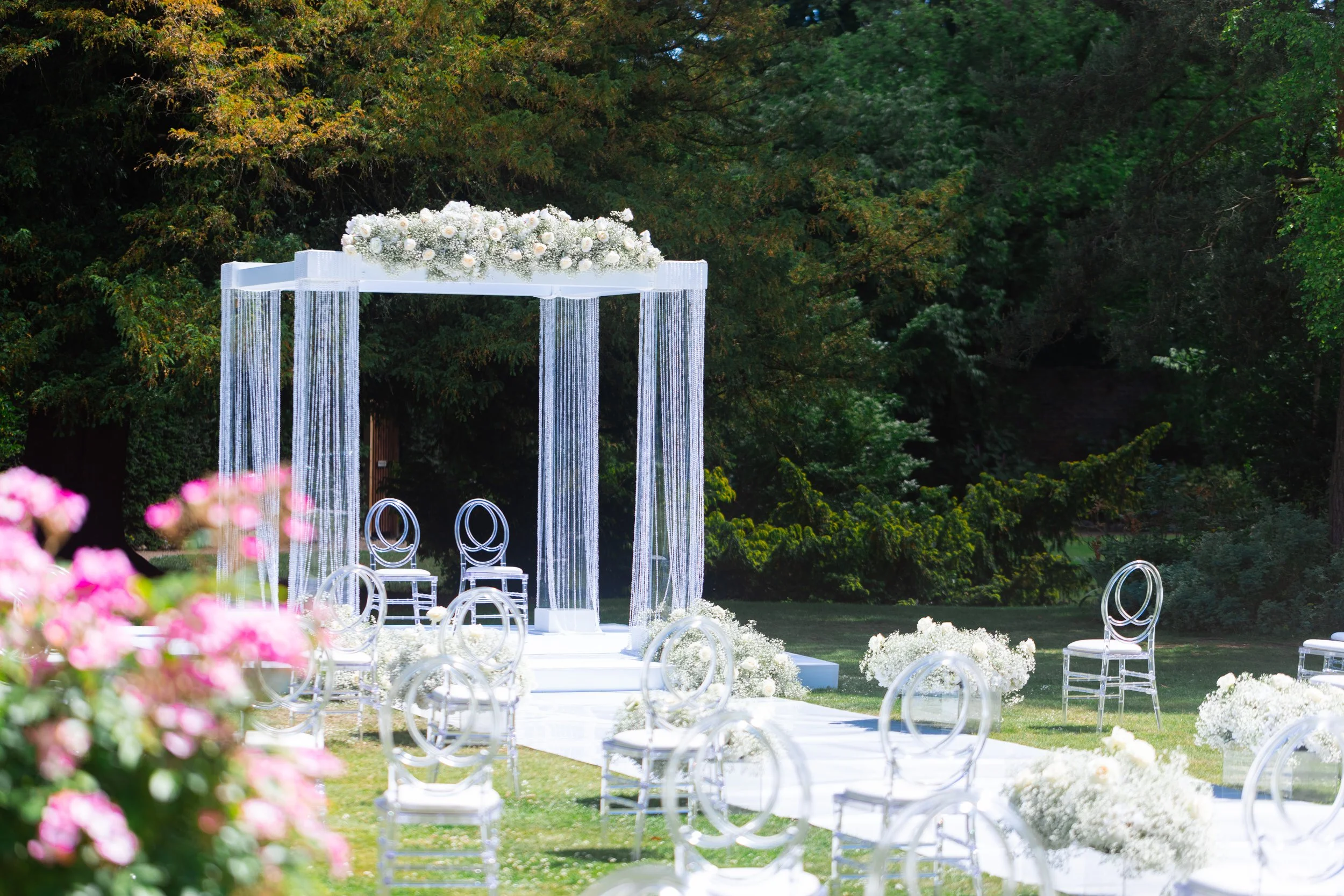
The big question: Can you reuse wedding flowers after an outdoor ceremony?
Yes — and I absolutely encourage couples to consider it. Repurposing wedding flowers is one of the best ways to get more value from your floral investment. For example, ceremony flowers could potentially be moved to:
the top table
the cake table
the bar
the entrance/welcome sign
the seating plan
the reception room
a lounge area
a gift table
another focal point at the venue
But there is an important caveat, not every flower arrangement should be moved and this becomes particularly important after a hot outdoor ceremony.
Heat changes the repurposing equation
Imagine you've had a beautiful ceremony in full sunshine, your floral arrangements have spent an hour outside, they're warm. and slightly more dehydrated than they were when they arrived. Your florist now needs to dismantle them, transport them to another part of the venue, potentially rework them and make them look beautiful again for dinner. That isn't always going to be realistic.
This is why repurposing needs to be discussed when the flowers are designed, not added to the running order on the wedding morning. Your florist can then design arrangements with movement in mind.
Design your ceremony flowers to be moved
This is where a little forward planning can make a big difference. Instead of creating one enormous installation that has to be dismantled after the ceremony, you might use several smaller arrangements.
For example, floral meadow-style arrangements along the aisle can sometimes be lifted and transferred to the reception.
Pedestal arrangements can be moved to another part of the venue.
Welcome flowers can become reception flowers.
A ceremony arrangement can become part of the top-table design.
And smaller arrangements can be distributed around the room.
The key is to design them so that they can actually be moved. That sounds obvious, b ut it is surprisingly easy to create something spectacular for a ceremony that is absolutely not designed to be dismantled and relocated.
Don't leave repurposing until the last minute
There is another important consideration: who is moving the flowers? Your florist? Your wedding planner?
The venue? A member of your family?
If your florist is responsible, this needs to be built into the schedule and quote.
There may be dismantling, transport, refreshing, reconditioning and reinstallation involved and if the ceremony is outside in extreme heat, there may also be a judgement call on the day. Sometimes the most sensible decision is to leave certain flowers exactly where they are rather than risk damaging them by moving them. The best floral plans have flexibility built into them.
What flowers are best for an outdoor summer wedding?
There isn't one universal list of “heat-proof wedding flowers”. A flower's performance depends on the variety, its condition, the temperature, whether it has access to water, the amount of direct sun and how it has been handled. That said, experienced florists will often favour more resilient varieties when they know a design is going to spend significant time outdoors. Depending on the season and style, these might include:
Roses
A classic for a reason. Roses can be wonderfully versatile and, with good conditioning and hydration, can perform well in summer wedding designs.
Carnations
Often overlooked because people associate them with traditional arrangements, but modern varieties can be incredibly beautiful and useful for summer wedding work.
Chrysanthemums
Another hardworking flower that can provide excellent longevity and structure.
Hardy foliage
Good foliage can be incredibly valuable in an outdoor installation, providing structure and helping to create a lush design without relying entirely on delicate blooms.
But here's the important bit:
Don't choose your wedding flowers from a generic “heat-proof flowers” list online. Choose them with your florist based on your exact wedding. A Surrey garden wedding in full afternoon sun is different from a shaded London courtyard. An Essex wedding in a marquee is different again.
What about hydrangeas?
Hydrangeas deserve a special mention because they're gorgeous and because they can be rather dramatic. They are thirsty flowers and can suffer quickly if they become dehydrated, particularly in hot conditions. That doesn't mean you can't use hydrangeas for a summer wedding but it does mean they need to be handled thoughtfully.
If you love hydrangeas, tell your florist. They can advise on the best way to incorporate them into the design and where they are most likely to perform well. The same principle applies to any particularly delicate flower you have your heart set on. So I’d say, don't remove it from the moodboard. Have a conversation about it.
What about bouquets in hot weather?
Your bridal bouquet deserves special consideration because, unlike most ceremony flowers, it may spend a significant amount of time being held. It will be carried outside, it may be photographed, it may be put down, it may be carried again and, if you're having photographs between the ceremony and reception, it may be out of water for longer than you'd expect.
On a hot day, keeping the bouquet hydrated for as long as possible before it is needed can make a real difference. Your florist can also advise on how and where to keep it during quieter moments. The RHS similarly recommends conditioning cut flowers thoroughly and keeping them in a cool environment before bringing them into warmer conditions.
Wind matters too
Heat isn't the only outdoor wedding problem, wind can be just as challenging. A hot, breezy day can increase moisture loss and can physically damage delicate petals and foliage.
It can also affect larger floral installations so when planning an outdoor ceremony, your florist needs to consider:
Sun + temperature + wind + water + structure + timing.
It's the combination that matters, this is why a florist should ideally see or understand your ceremony location before designing a large outdoor installation.
What if summers continue to get hotter?
This is the bigger question I'm increasingly interested in as a wedding florist. The Met Office's climate projections indicate that the UK is likely to experience hotter, drier summers, with hot spells becoming more frequent, particularly in the south-east.
The latest State of the UK Climate report also shows just how much temperatures have shifted. The 2016–2025 decade was 0.51°C warmer than the 1991–2020 average, and the number of days above 30°C and nights above 18°C in Greater London has more than quadrupled compared with 1961–1990.
For wedding floristry, that doesn't mean we should panic and replace every beautiful summer flower with something “heatproof”, it means we need to become better at designing for the conditions.
That could mean:
selecting varieties more carefully
working more closely with seasonal flowers
installing closer to ceremony time
building hydration into the design
using shade more strategically
considering ceremony timings
designing arrangements that can be moved
creating more flexible floral installations
having contingency plans for extreme weather
reconsidering where flowers are positioned within an outdoor venue
In other words, weather needs to become part of the floral brief.
Your wedding flowers should be designed around your wedding — not the other way around
If you've spent months creating a Pinterest board full of beautiful summer wedding flowers, I completely understand why you might worry when the forecast suddenly says 30°C but don't immediately start deleting flowers from your wish list. Instead, tell your florist exactly what you're planning:
Where is the ceremony?
What time is it?
Will the flowers be in direct sun?
How long will the ceremony last?
Are you having photographs afterwards?
Do you want the flowers moved to the reception?
Is there a shaded area?
Can the ceremony be relocated if necessary?
What does the venue's access look like?
These questions allow your florist to make the design work for the day and that's ultimately what good wedding flowers should do.
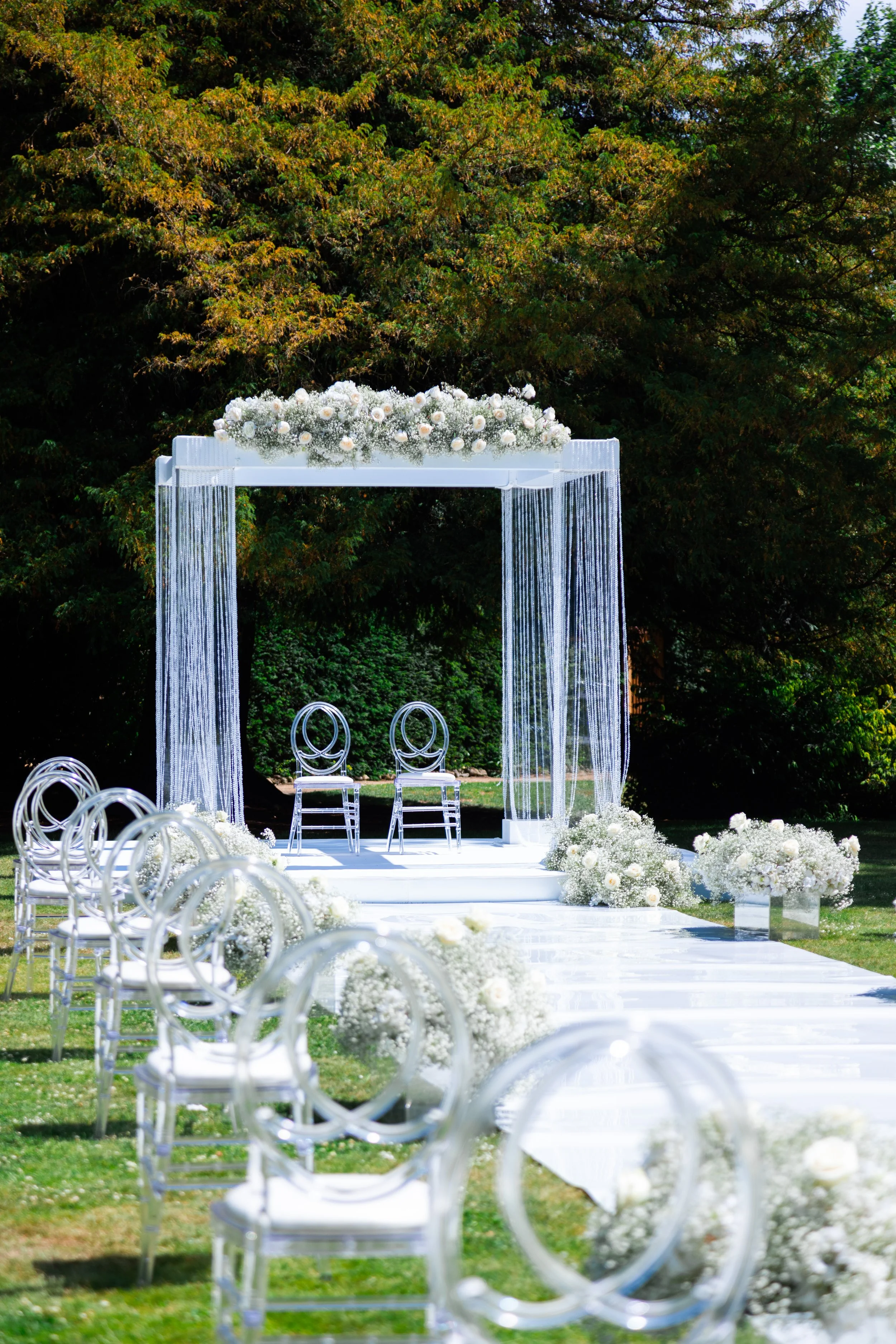
A beautiful wedding doesn't have to mean flowers that only work for one photograph
One of my favourite things about floral design is finding ways to make flowers work harder. Your ceremony flowers shouldn't necessarily have to be beautiful for 45 minutes and then disappear. With the right design, planning and logistics, they can become part of the next chapter of your wedding day.
The flowers that frame your ceremony could welcome guests into the reception.
The arrangements lining the aisle could become centrepieces.
The flowers surrounding your vows could later frame your top table and suddenly, you're not just thinking about how beautiful the flowers look at 3pm. You're thinking about how they can contribute to the whole wedding. That becomes particularly important when you're investing in large floral installations.
The florist's golden rule for a hot outdoor wedding
If I had to give a couple just one piece of advice, it would be this; don't wait for the weather forecast to start thinking about the heat.
Tell your florist from the beginning that your ceremony is outdoors.
Tell them you want to repurpose the flowers.
Tell them your ceremony time.
Tell them where the sun falls.
Tell them what flowers you love.
Then let them work out how to bring all those things together.
Because summer wedding flowers aren't simply about finding flowers that can survive a hot day, they're about creating a floral design that is beautiful, practical and resilient enough for the conditions you're asking it to work in. If British summers continue getting warmer, that is only going to become more important. After all, we can't control the weather, but we can plan for it and, hopefully, we can still have all the flowers we've been dreaming about along the way.
FAQ: Hot weather and wedding flowers
How do you keep wedding flowers fresh in hot weather?
Keep flowers well hydrated, out of direct sunlight wherever possible and in cool conditions for as long as possible before installation. Flower choice, conditioning and installation timing are also important. The RHS recommends conditioning stems, using clean water and keeping flowers in a cool environment before display.
Can wedding flowers be reused after an outdoor ceremony?
Often, yes. The best candidates are arrangements designed to be moved and that have not spent excessive time in difficult conditions. Repurposing should be discussed with your florist during the design stage so the arrangements and installation schedule can accommodate it.
What flowers are best for an outdoor wedding?
There isn't one universally best flower. Your florist should consider the flower variety, season, temperature, sunlight, hydration and length of time the flowers will be outside. More resilient flowers can be selected for exposed areas, while delicate varieties can be used more strategically.
How long can wedding flowers stay outside?
There isn't a reliable universal time because temperature, sunlight, wind, flower variety and hydration all make a difference. A shaded, well-hydrated arrangement may behave very differently from the same flowers sitting in direct sun.
Should I avoid an outdoor wedding if it's going to be hot?
Not necessarily. A hot forecast means you need a better plan, not necessarily a different wedding. Consider shade, ceremony timing, guest comfort, hydration, flower selection and a weather contingency with your venue and suppliers.
Planning an outdoor wedding in London, Surrey or Essex?
If you're dreaming of beautiful summer wedding flowers but wondering how they'll cope with the heat, let's talk. I'll help you choose flowers and designs that work with your venue, your plans and the season — including ways to make your ceremony flowers work twice when possible. Because your flowers should be beautiful at the ceremony, not just beautiful in the forecast.
Get in touch to discuss your wedding flowers.